Available courses

(May) Advanced Professional Diploma in Addiction Studies

Course Description

This programme provides an advanced professional foundation in addiction studies, integrating neurobiological, psychological and psychoanalytic perspectives. It is not a full specialist training in addiction medicine, psychiatric treatment or any single addiction-treatment modality. It does not qualify participants to practise outside their existing scope of competence. Learners should apply the material within their existing professional role, training background and ethical responsibilities.

The course is particularly relevant for professionals who encounter addiction, compulsive behaviour or dual diagnosis in their work. Learners are encouraged to seek appropriate supervision, further specialist training and referral pathways when working with acute withdrawal, medical complications, safeguarding concerns, severe psychiatric comorbidity or presentations requiring specialist addiction or medical services.

The Freudian and Lacanian material included throughout the programme is presented as substantive theoretical content central to this course's advanced, psychoanalytically informed orientation to addiction. These concepts should never be used to impose interpretation prematurely or to replace evidence-informed, collaborative and client-centred care. Instead, they support listening carefully to speech, repetition, desire, and the symbolic or relational meanings that may shape the relationship, all held alongside humility, ethical restraint, and appropriate supervision.

Learners should understand that addiction work can raise difficult and sometimes distressing material, both clinically and personally, and that the client's safety, consent, pace and lived experience must remain central throughout. Compassionate, psychoanalytically informed practice can enrich assessment and support when held alongside evidence-informed practice and clear professional boundaries.

Teaching is delivered live online and includes lecturer-led input, case discussion, breakout-room case studies, skills practice and reflective exercises. Learners are expected to actively engage with the live sessions, Moodle LMS materials, self-directed reading, reflective tasks and assessment preparation. The programme supports students in developing not only academic knowledge but also professional judgement, ethical reasoning, self-awareness and the capacity to work confidently and reflectively with addiction.

The course may support continuing professional development for counsellors, psychotherapists, trainees, social care workers, healthcare professionals, educators, psychologists, supervisors, community workers and allied professionals. Students should consult the lecturer, course leader or academic registry office if they require clarification regarding accreditation, assessment, attendance, professional pathway requirements, suitability, scope of practice or progression.

This programme welcomes practitioners, students and members of the public alike. Practitioners already working in counselling, psychotherapy, healthcare, education or social care are encouraged to use the course to consolidate and extend their existing knowledge of addiction studies through advanced psychoanalytic perspectives. Students working toward a qualification in counselling or psychotherapy will find the course a rigorous foundation that complements their wider studies. Members of the public, including those with a personal interest in this area of study, are warmly encouraged to enrol.

The College recognises that learners come to this subject from diverse personal and professional backgrounds, and the course is designed to be rigorous and meaningful regardless of prior experience. Reflective exercises, case discussion and skills practice are structured to support learners at all levels, while maintaining the academic depth expected of an Advanced Professional Diploma for Level 8/9 CPD learners. Learners are encouraged to engage honestly and thoughtfully with the material, and to seek appropriate support, supervision or further training where relevant to their personal circumstances or professional development goals.

Professional Diploma in Bereavement, Loss & Grief

Professional Diploma in Bereavement, Loss & Grief

Course modified date: 17 July 2026

The Professional Diploma in Bereavement, Loss, and Grief is a intensive 10-week online programme designed for helping professionals who wish to deepen their clinical understanding of grief and strengthen their capacity to support individuals experiencing loss. Suitable for therapists, counsellors, social workers, and related practitioners, the course integrates theory, research, and practice to address the multifaceted nature of bereavement across diverse contexts.

Participants engage with established and contemporary theories of grief, including stage-based, task-oriented, and non-linear models, while critically examining how grief manifests psychologically, emotionally, and physically. Through real-life case studies, reflective exercises, and applied learning activities, learners develop practical, evidence-informed skills for working compassionately and effectively with grieving clients. Particular emphasis is placed on recognising complicated and prolonged grief, supporting different populations across the lifespan, and responding ethically and sensitively within varied cultural and religious frameworks.

The course progresses from foundational concepts of bereavement and loss to advanced applications in grief counselling, cultural competence, and post-loss integration. Weekly modules explore grief in children, adults, and older populations; the impact of grief on mental and physical health; and strategies for fostering resilience, meaning-making, and healing after loss.

Delivered in a flexible online format, the programme allows participants to learn at their own pace while engaging with a supportive professional learning community. By the end of the course, graduates will be well equipped to provide high-quality, empathetic, and culturally responsive grief support in professional practice.

Certificate in Counselling & Psychotherapy

Certificate in Counselling & Psychotherapy

Course modified date: 19 March 2026

Are you interested in pursuing a BSc (Honours) Degree in Counselling & Psychotherapy? The journey begins with our Certificate in Counselling & Psychotherapy at State of Mind Counselling & Psychotherapy.

This foundational certificate course provides the essential knowledge and skills required for entry into an accredited honours degree programme. It is the minimum entry-level qualification for those aspiring to become professional counsellors and psychotherapists.

Whether you're starting a new career or deepening your personal development, this course offers a comprehensive introduction to the field and lays the groundwork for further academic and professional training.

Begin your path toward a meaningful and rewarding profession—enrol today.

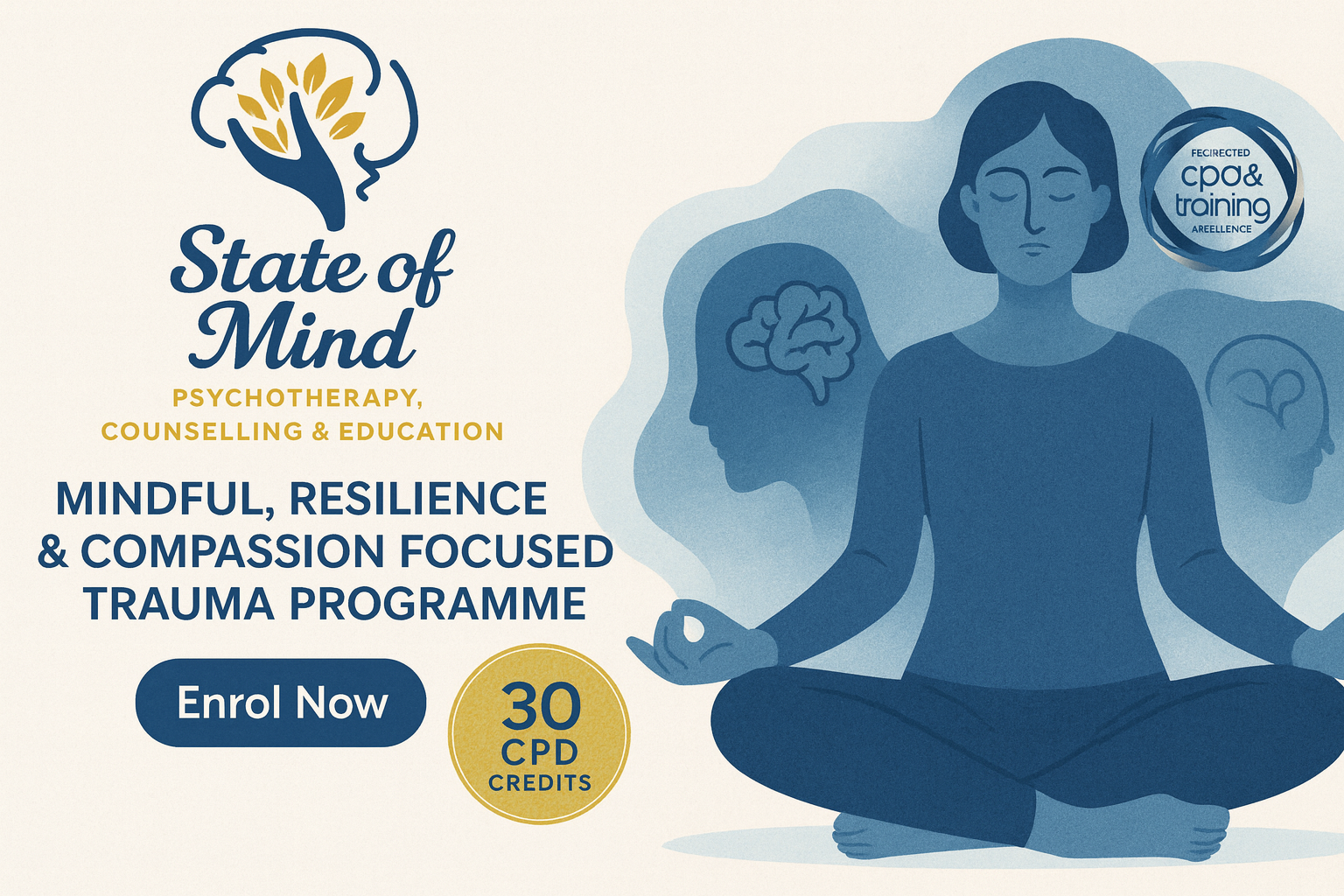
Mindful, Resilience & Compassion Focused Trauma Programme (MRCFTP)

This programme is a professionally developed programme designed to support emotional wellbeing, build psychological resilience, and cultivate a deeper sense of compassion—both for ourselves and others.

Developed in partnership with MindfulnessUK, the CMR Course integrates core principles of mindfulness, compassion-focused therapy, and resilience training. Participants are guided through practices and reflections that foster greater awareness, self-kindness, and emotional balance in the face of life’s challenges.

This 4-week course is ideal for individuals seeking to:

  • Manage stress, anxiety, or emotional overwhelm

  • Build inner strength and self-compassion

  • Deepen their mindfulness practice

  • Enhance overall psychological wellbeing

Our trained teachers are listed on the official MindfulnessUK Trained Teachers Register. You can verify our credentials here:
👉 View our registration on the MindfulnessUK Trained Teachers Register

Professional Diploma in Child & Adolescent Mental Health

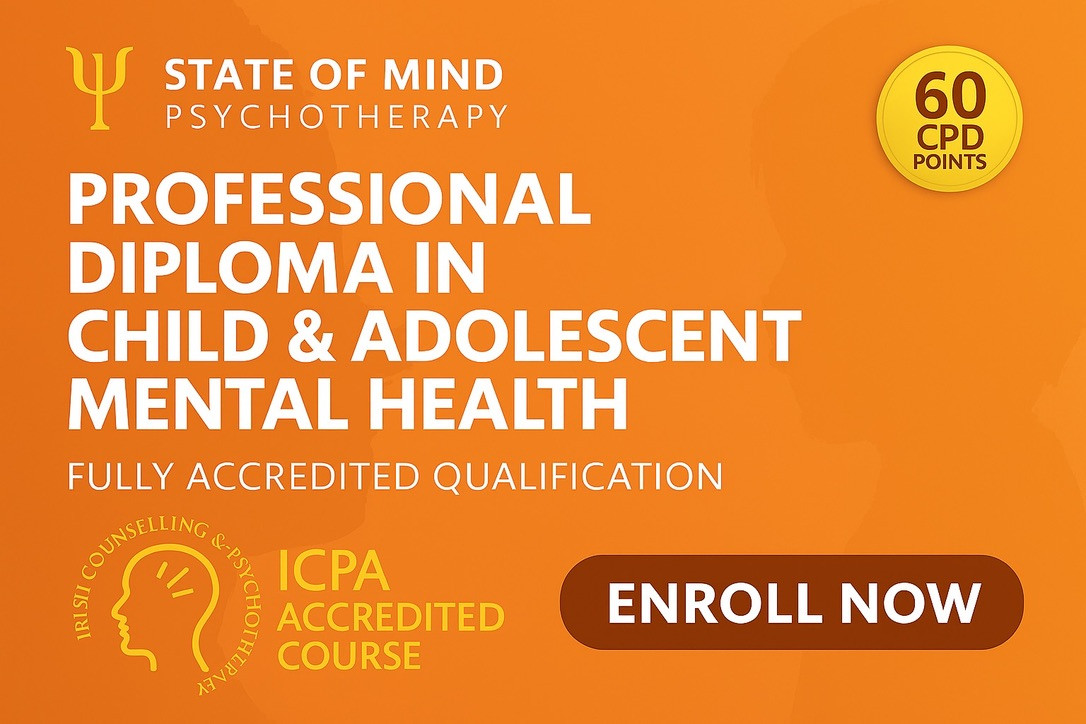
The Professional Diploma in Child & Adolescent Mental Health is designed for professionals who work with young people and want a deeper, evidence-based understanding of their emotional and psychological development. The course explores how children and adolescents think, feel, and behave, and how family, school, community, and online environments influence their mental health.

You will be introduced to key mental health difficulties commonly seen in childhood and adolescence, such as anxiety, low mood, behavioural challenges, neurodevelopmental conditions, trauma-related difficulties, and emerging risk behaviours. Emphasis is placed on early identification, understanding underlying causes, and knowing when and how to refer on for specialist support.

Throughout the diploma, you will develop practical skills in communication, engagement, and relationship-building with children, teenagers, and families. You will learn how to have sensitive conversations about mental health, how to respond to distress, and how to provide safe, supportive, and boundaried help within your professional role.

The course draws on current research, real-life case examples, and reflective practice. Teaching is typically delivered through lectures, workshops, group discussions, and guided self-study, allowing you to link theory directly to your day-to-day work.

This diploma is suitable for teachers, SNAs, social care workers, youth workers, nurses, counsellors, social workers, and other allied professionals. By the end of the programme, you will have increased confidence in recognising mental health needs, collaborating with families and services, and contributing meaningfully to a young person’s support network.

Graduates leave with a strong foundation in child and adolescent mental health theory and practice, ready to apply their learning in schools, community settings, health and social care, or further specialist study.


Professional Diploma in Clinical Psychology & Mental Health Practice

The Professional Diploma in Clinical Psychology & Mental Health Practice is designed for professionals who wish to deepen their understanding of psychological distress and strengthen their practical skills in working with adults and young people. The course provides a solid grounding in key principles of clinical psychology, including models of mental health and illness, assessment, formulation, and evidence-based intervention.

Learners explore the nature, presentation, and impact of common mental health difficulties such as anxiety, depression, trauma, personality-related difficulties, psychosis, and co-occurring issues like substance use. Attention is given to risk, safeguarding, and ethical decision-making, ensuring that participants can work safely and responsibly within their professional roles.

Across the programme, you will develop the ability to think psychologically about the individuals, families, and systems you work with. You will learn how to gather and interpret information, understand what might be maintaining a person’s difficulties, and consider appropriate pathways to care, including multidisciplinary and community-based supports. Reflective practice is a core focus, helping you to integrate theory with your own values, experience, and professional context.

Teaching typically combines lectures, workshops, skills practice, and guided independent learning. Case examples and scenarios are used to bring ideas to life and to build confidence in applying knowledge to real-world situations.

This diploma is particularly relevant for those working in health, social care, counselling, community and voluntary services, education, and related fields. By completion, you will have enhanced insight into clinical psychology perspectives, improved competence in mental health practice, and a stronger foundation for collaboration with specialist services or for further postgraduate training in psychology, psychotherapy, or related disciplines. Graduates leave the course with a clearer professional identity, a shared language for talking about mental health, and practical tools they can use immediately to support service users, contribute to care planning, and advocate for psychologically informed services in their organisations.


(July) Professional Diploma in Trauma-Informed Intervention for Counselling, Psychotherapy & Allied Healthcare Professionals

Course Description

The Professional Diploma in Addiction Studies is a comprehensive, evidence-based programme designed to deepen understanding of addiction and enhance professional competencies in working with individuals affected by substance use and behavioural addictions. Delivered online over 10 weeks, this diploma is suitable for psychotherapists, counsellors, healthcare workers, educators, social care professionals, and anyone with a professional or personal interest in addiction and recovery.

Grounded in a trauma-informed and integrative framework, the course explores the psychological, neurobiological, social, and cultural dimensions of addiction. Each weekly module combines theory with practical case examples, group discussions, and reflective practice to ensure applied learning. Participants will gain tools for assessment, intervention planning, and ethical decision-making, while also learning about recovery models, relapse prevention, and self-care in the therapeutic relationship.

Whether you’re new to the field or seeking to build on existing experience, this diploma offers a valuable and accessible foundation in addiction studies — equipping you to support clients with empathy, clinical insight, and professional integrity. The course also integrates a strong theory and application principles of Psychoanalysis


Site announcements

Accredited Courses

by Marie (Academic Registrar) -


Accredited Courses

  • Professional Diploma in Psychoanalysis- 60 Hours & 60 CPD Points (Live Online)
  • Professional Certificate in Working with LGBTQI+ Youths- 60 Hours & 60 CPD Points ( Live Online)
  • Professional Diploma in Addiction Studies- 60 Hours & 60 CPD Points (Live Online)
  • Certificate in Counselling & Psychotherapy- 200 Hours & 200 CPD Points (Live Online)
  • Professional Diploma in Bereavement, Loss & Grief- 60 Hours & 60 CPD Points (Live Online)
  • Professional Diploma in Cognitive Behavioural Therapy (CBT) -60 Hours & 60 CPD Points (Live Online)
  • Professional Diploma in Domestic Violence & Sexual Abuse- 60 Hours & 60 CPD Points (Live Online)
  • Mindful, Resilience & Compassion Focused Trauma Programme (MRCFTP)- 30 Hours & 30 CPD Points (Live Online)
  • Professional Diploma in Traumatology & Post Traumatic Stress Disorder- 60 Hours & 60 CPD Points (Live Online)
  • Professional Certificate in Counselling Skills -30 Hours & 30 CPD Points (Live Online)
  • Professional Diploma in Psychotherapy for Survivors of Physical, Emotional & Sexual Abuse- 60 Hours & 60 CPD Points (Live Online)
  • Professional Diploma in Crisis Intervention & Suicide Prevention- 60 Hours & 60 CPD Points (Live Online)
  • Professional Diploma in Working with Anger, Rage & Emotional Regulation- 60 Hours & 60 CPD Points (Live Online)
  • Advanced Professional Diploma in Coaching, Mentoring & Supervisory Management- 120 Hours & 120 CPD Points (Live Online)
  • Professional Diploma in Grief Beyond Death: Non-Death Loss & Anticipatory Grief– 60 Hours & 60 CPD Points (Live Online)
  • Professional Diploma in Working with Shame & the Hidden Shadow Self – 60 Hours & 60 CPD Points (Live (Online)
  • Professional Diploma in Working with Expected & Unexpected Death– 60 Hours & 60 CPD Points (Live Online)
  • Professional Diploma in Psychopharmacology for Mental Healthcare Workers– 60 Hours & 60 CPD Points (Live Online)
  • Professional Diploma in Working with the Inner Child, the ID, Ego & Superego & Child Development– 60 Hours & 60 CPD Points (Live Online)
  • Professional Diploma in Clinical Psychology & Mental Health Practice- 60 Hours & 60 CPD Points (Live Online)
  • Professional Diploma in Child & Adolescent Mental Health- 60 Hours & 60 CPD Points (Live Online)
  • Professional Diploma in Trauma-Informed Counselling & Intervention- 60 Hours & 60 CPD Points (Live Online)
  • Professional Diploma in Relationship, Couples & Family Therapy- 60 Hours & 60 CPD Points (Live Online)
  • Professional Diploma in Psychodynamic Counselling & Insight-Oriented Therapy- 60 Hours & 60 CPD Points (Live Online)
  • Professional Diploma in Group Therapy Processes & Facilitation- 60 Hours & 60 CPD Points (Live Online)
  • Professional Diploma in Eating Disorders, Body Image & Emotional Health- 60 Hours & 60 CPD Points (Live Online)
  • Professional Diploma in Integrative Trauma Therapy & EMDR Practice- 60 Hours & 60 CPD Points (Live Online)
  • Professional Diploma in Psychosomatic Health & Mind–Body Approaches- 60 Hours & 60 CPD Points (Live Online)
  • Professional Diploma in Advanced Therapeutic Skills for Complex Clients- 60 Hours & 60 CPD Points (Live Online)
  • Professional Diploma in Applied Neuroscience for Counselling & Psychotherapy- 60 Hours & 60 CPD Points (Live Online)